
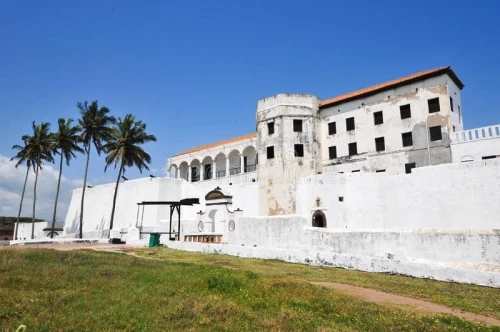
First established as a trade settlement, the castle later became one of the most important stops on the route of the Atlantic slave trade.Elmina is located along the southern Cape Coast region of Ghana, west of Accra. The town itself is primarily a fishing port, with a bustling commercial scene and lively atmosphere. Famous on account of the colonial fort built here in 1482 by the Portuguese, the small fishing village of Elmina is a picturesque stop-off along Cape Coast steeped in history.
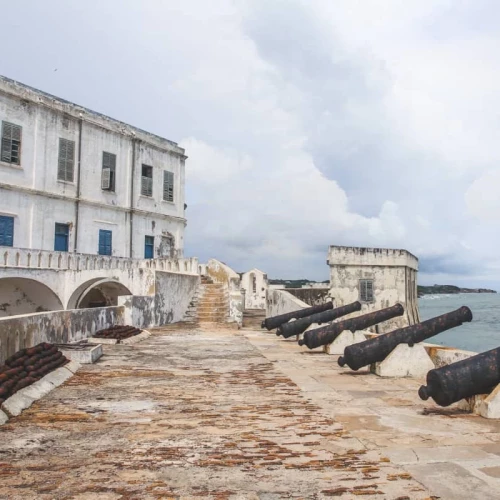
The European traders built and occupied many forts along the coast of Ghana in the 15th-17th centuries to protect their trading posts. Elmina Castle was erected by the Portuguese in 1482 as Castelo de São Jorge da Mina (St. George of the Mine Castle), also known as Castelo da Mina or simply Mina (or Feitoria da Mina), in present-day Elmina, Ghana (formerly the Gold Coast).
It was the first trading post built on the Gulf of Guinea, and the oldest European building in existence south of the Sahara.
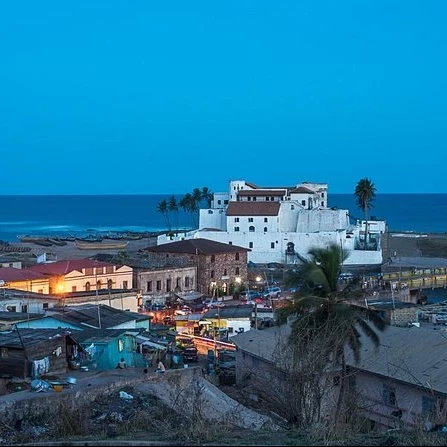
This area became heavily competed for in terms of its strategic position for trade, by other European powers. As the plantations in America took off, the trade in slaves expanded, and Elmina became the last place many thousands of Africans would see of their homeland, for many it would also be the last place they would see altogether, due to the high death rates incurred during the middle passage in such abominable conditions. At the height of the trade, 30,000 slaves were passing through Elmina each year on their way to the Americas. This continued for nearly 300 hundred years in appalling conditions. There were many horrors witnessed here, as it is where the slaves were detained and tortured before being shipped to the ‘New World’.